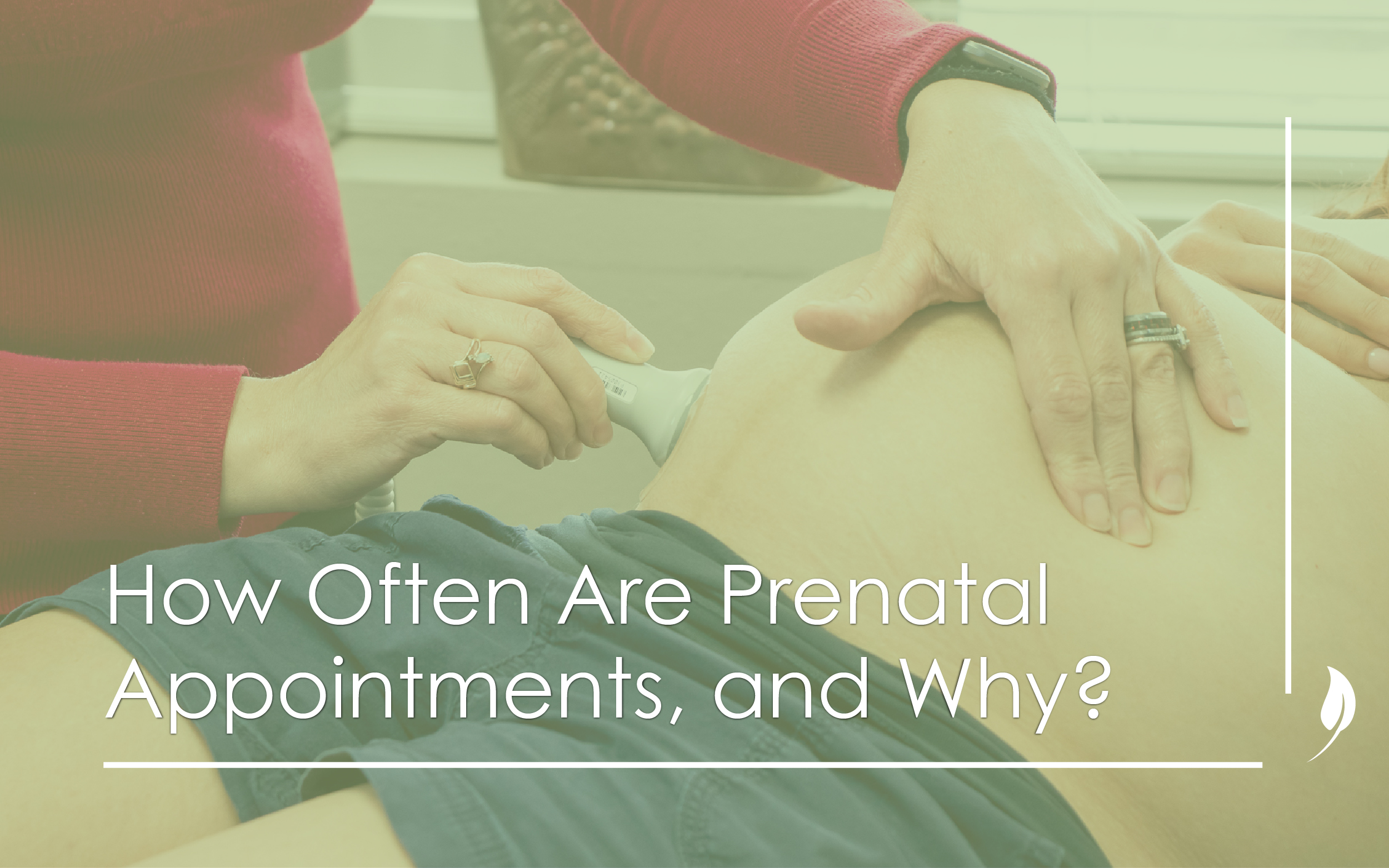
How Often Are Prenatal Appointments, and Why?
Why appointment timing matters
Prenatal appointments are not just about checking boxes. They build a pattern over time. Your midwife tracks how your pregnancy is progressing, how your body is responding, how your baby is growing, and how you’re feeling emotionally. The schedule has an intention behind it.
Early pregnancy brings one set of needs. Late pregnancy brings another. You aren’t meant to carry every question and symptom alone until the very end. Regular visits create consistent touchpoints so your care team can notice changes early and support you through each stage.
The standard prenatal visit schedule
Every four weeks in early pregnancy
In early pregnancy, visits typically happen every four weeks until about 28 weeks. This cadence gives your midwife time to establish baseline health information, review your health history, and monitor early pregnancy changes.
These visits also create space for education. Many families have questions about fatigue, nausea, food, supplements, movement, and what is normal versus concerning. You should have time for those questions. You should not feel rushed through them.
Every two weeks from 28 to 36 weeks
From about 28 to 36 weeks, visits usually move to every two weeks. At this stage, your baby grows quickly, and your body changes more noticeably. Your midwife tracks the baby’s growth and position, checks blood pressure, and watches for signs that might require extra monitoring.
This is also a common time for birth planning conversations to become more specific. Families often start asking, “How will I know I’m in labor?” “When should I call?” “What does early labor usually feel like?” More frequent visits make those conversations easier because you can build them over time.
Weekly visits from 36 weeks to birth
From about 36 weeks until birth, visits typically happen weekly. These appointments help confirm the baby’s position, monitor late pregnancy changes, and review signs of labor and when to call. They also provide emotional reassurance.
Many families feel a mix of excitement and nerves at this stage. Weekly visits create steady support. Questions often come up suddenly. It helps to have a consistent place to bring them.
Why birth centers spend more time at visits
Birth center care often includes longer appointments. At Birth Center Stone Oak, prenatal visits commonly last 30 minutes or longer. That time allows education and conversation to be part of care.
These visits support the whole person, not only physical measurements. Your midwife has time to ask how you’re coping, how you’re sleeping, what you’re eating, how your body feels, and what worries might be sitting in the background.
Partners and siblings can be involved when appropriate. Pregnancy affects the family system, not only the pregnant person, and inclusion matters.
What might change the visit schedule
Not every pregnancy follows the exact same schedule. Some people need more frequent visits due to symptoms, medical history, or changes in risk status. Some families need extra time and support. Your care plan should fit you, not the other way around.
Each visit builds knowledge, trust, and confidence. Prenatal care prepares you for birth, postpartum recovery, and parenting. It’s about feeling supported along the way.
To learn more about prenatal care, visit Birth Center Stone Oak, or explore our YouTube channel.