
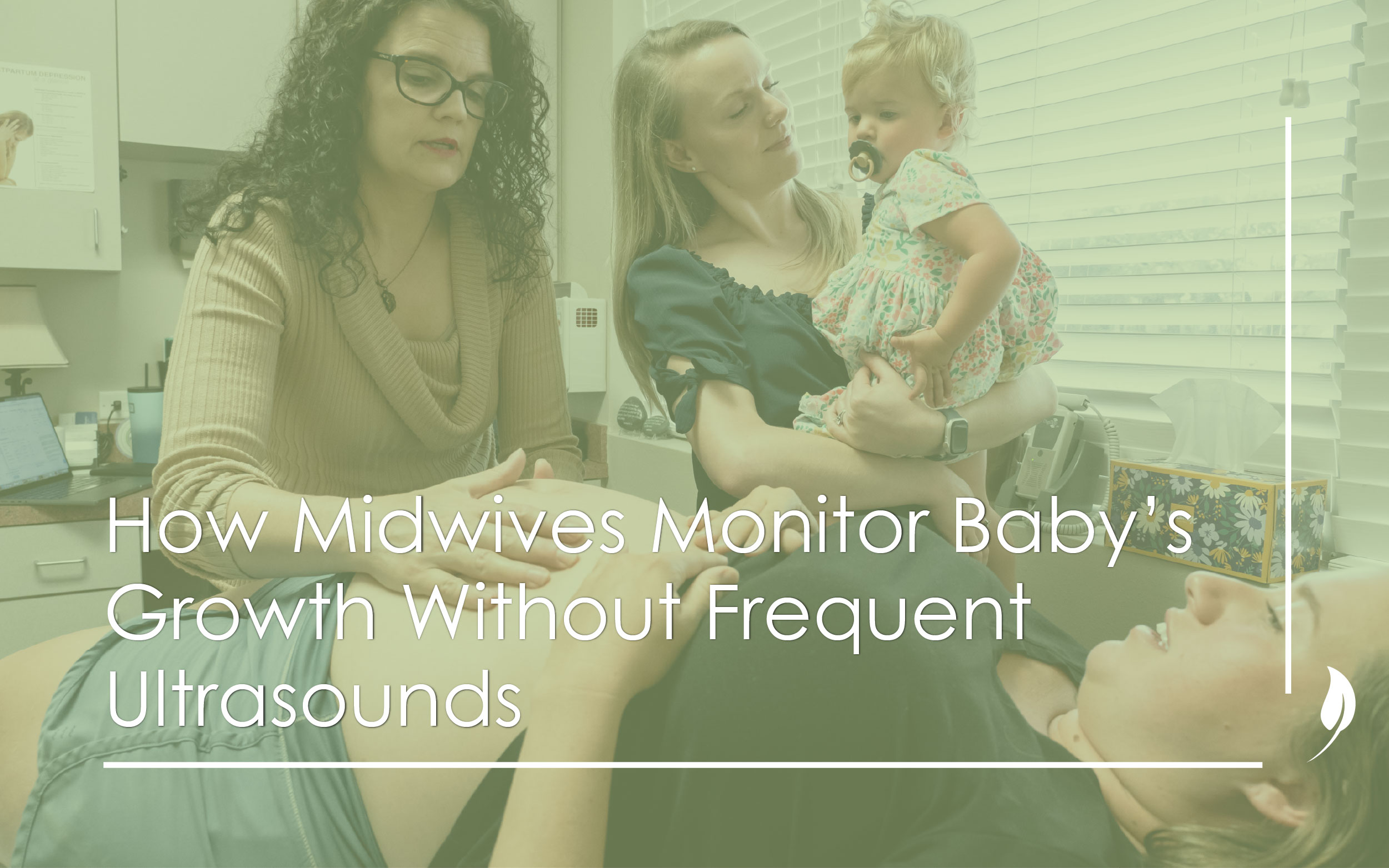
How Midwives Monitor Baby’s Growth Without Frequent Ultrasounds
One question we hear often is whether frequent ultrasounds are necessary to know if a baby is growing well. It is a reasonable concern. Ultrasounds can be helpful tools, and many parents expect them to be used regularly throughout pregnancy.
In most healthy, low-risk pregnancies, frequent ultrasounds are not required to track growth. Midwives rely on several well-established methods that have been used safely for many years. These approaches allow us to gather information gradually at each prenatal visit rather than relying on a single image.
At Birth Center Stone Oak, our goal is simple. We combine careful observation, hands-on assessment, and consistent prenatal visits to build a clear picture of how both parent and baby are doing. Each visit adds another piece of information.
When ultrasound is used
Ultrasound does play an important role during pregnancy. Many families have one early ultrasound to confirm dating, especially if the timing of the pregnancy is uncertain. Another common scan is the anatomy ultrasound around the middle of pregnancy. This looks at the baby’s organs, placenta placement, and overall development.
Outside of those situations, ultrasounds are usually reserved for specific concerns. If something during a prenatal visit suggests we need a closer look, we may recommend imaging. For example, if growth seems unusually fast or slow, an ultrasound can provide more detail.
Using ultrasound in this way allows us to rely on it when it adds meaningful information, rather than using it routinely when everything appears normal.
Fundal height measurements
One of the most common ways midwives track growth is through fundal height measurements. This is the measurement from the top of the uterus to the pubic bone.
Starting in the second trimester, this measurement usually increases at a steady rate that roughly matches the number of weeks of pregnancy. At each visit, we record the number and compare it with previous measurements.
What matters most is the trend over time. A consistent pattern tells us the uterus and baby are growing as expected. If a measurement falls outside the typical range or changes unexpectedly, it signals that we may want to investigate further.
Hands-on assessment
Midwives also use hands-on evaluation to understand how the baby is positioned and growing. A technique called Leopold’s maneuvers allows us to gently feel the baby’s body through the abdomen.
Through this process, we can often determine the baby’s position, whether the head is down, and how the baby is settling in the uterus. Experienced midwives also gain a sense of the baby’s overall size and the amount of amniotic fluid.
This type of assessment develops through practice and clinical experience. While it may seem simple, it provides valuable information during each prenatal visit.
Fetal heart rate monitoring
Listening to the baby’s heartbeat is another reassuring part of prenatal care. At each appointment, we check fetal heart tones using a handheld doppler device.
The heart rate pattern gives us insight into the baby’s well-being. A steady rhythm within the expected range is a strong indicator that the baby is doing well. Many parents also appreciate hearing the heartbeat because it provides a tangible connection to the baby growing inside.
Maternal health indicators
The baby’s growth is closely connected to the parents’ overall health. During prenatal visits, we monitor several factors that help us understand that bigger picture.
Blood pressure checks help identify conditions that may affect the placenta and the baby’s growth. Weight trends give us a sense of nutritional status and overall pregnancy progress. Lab tests such as hemoglobin levels and glucose screening provide additional insight into how the body is supporting the pregnancy.
When maternal health is stable, it is a strong sign that the baby is receiving what they need to grow.
Final thoughts
Ultrasound is a valuable medical tool, but it is not the only way to understand how a baby is growing. Careful clinical assessment, consistent prenatal visits, and attention to overall health provide a reliable picture in most low-risk pregnancies.
At Birth Center Stone Oak, we focus on balanced care. We use technology when it is helpful and rely on skilled observation and experience the rest of the time. Together, these approaches support a safe and healthy pregnancy.
To learn more about prenatal care, visit https://www.birthcenterstoneoak.com or explore our YouTube channel.